Best Warehouse Management System (WMS) Software 2025: Complete Guide to Smart Warehouse & Inventory Management
Automata Editorial
Expert Insights team

In today's fiercely competitive business landscape, a Warehouse Management System (WMS) has become the operational backbone for companies that rely on an efficient supply chain. A warehouse is no longer just a place to store goods — it is the logistical nerve center that determines delivery speed, inventory accuracy, and ultimately, customer satisfaction. Automata Info Nusantara delivers integrated WMS solutions purpose-built for the dynamic and diverse needs of Indonesian industry.
Table of Contents
- 1. The Challenges of Traditional Warehouse Management in Indonesia
- 2. What Is a Warehouse Management System?
- 3. Core WMS Features: From Inbound to Analytics
- 4. IoT and Barcode Integration for Maximum Accuracy
- 5. Financial Impact: The ROI of WMS Implementation
- 6. Case Study: National Distribution Warehouse Transformation
- 7. Getting Started with WMS Implementation
The Challenges of Traditional Warehouse Management in Indonesia
A significant number of manufacturing, distribution, and retail companies across Indonesia continue to manage their warehouses using purely manual methods: tracking stock levels in fragmented spreadsheets, conducting grueling physical stock counts (stock opname) that consume days of operational downtime, and communicating between departments via paper forms that are easily lost, damaged, or contain handwriting errors. The consequences of these outdated methods are predictable and devastating to the bottom line.
Stock discrepancies between recorded data and actual physical inventory on the shelves routinely reach 5-10%, representing a massive, hidden financial drain. Expired goods are overlooked because there is no systematically enforced FIFO (First In, First Out) or FEFO (First Expired, First Out) rotation protocol. The time required to locate and pick a specific item is excessively long because there is no digitized bin location management system in place. All of these recurring, compounding problems lead to one devastating outcome: customers receive the wrong product, experience significant delays, or discover that items are unexpectedly out of stock — all of which directly erode their trust and loyalty toward your brand and drive them to competitors who have already modernized.
What Is a Warehouse Management System?
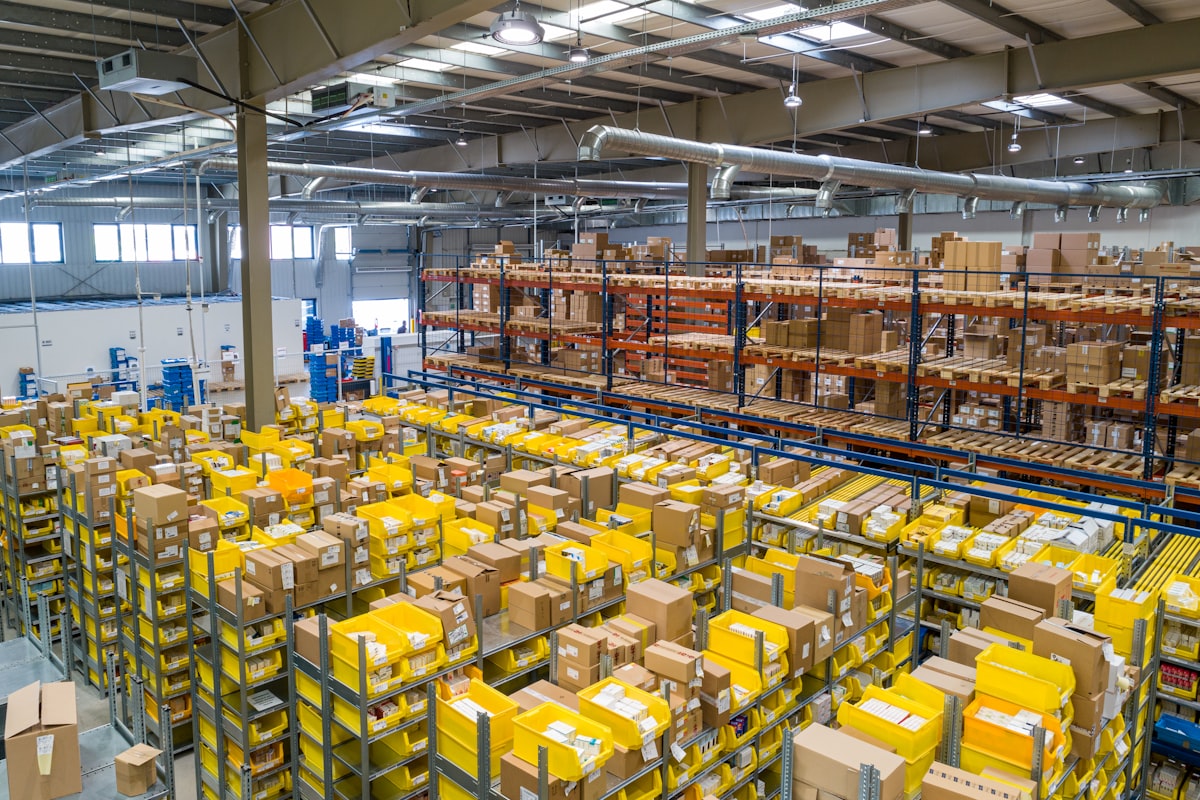
A Warehouse Management System (WMS) is a comprehensive, integrated software platform that digitizes every operational process within a warehouse — from receiving inbound goods and optimally storing them in designated locations (putaway), through picking items for customer orders, packing them accurately, all the way to dispatching outbound shipments. A true WMS is far more than a "digital stock book"; it is the operational brain that optimizes every movement and decision within your warehouse in real-time, transforming chaos into clockwork precision.
The defining characteristics of a modern WMS that set it apart from manual tracking or basic spreadsheet solutions include several critical capabilities:
- Real-Time Stock Visibility: Knowing the exact quantity and precise physical location of every SKU (Stock Keeping Unit) in the warehouse at any moment, from any device, without the need for disruptive manual physical counts.
- Intelligent Storage Location Optimization: The system intelligently recommends the optimal bin location based on item pick frequency, weight, dimensional constraints, and product compatibility rules.
- Complete Digital Audit Trail: Every single movement of goods — inbound, outbound, transferred, damaged, disposed — is permanently recorded with a digital timestamp, operator identity, and supporting documentation that cannot be tampered with or altered retroactively.
- Barcode and QR Code Integration: Eliminating manual data entry errors through fast, accurate automated scanning at every touchpoint in the warehouse process flow.
Core WMS Features: From Inbound to Analytics
1. Inbound Goods Receiving Management
The goods receiving process from suppliers is the critical starting point for warehouse data accuracy and integrity. A WMS enables automated verification between the original Purchase Order (PO) and the goods physically received on the dock through barcode scanning technology. Any discrepancy — whether in quantity, item type, or physical condition — is instantly detected and flagged before the goods are moved into the storage area, preventing the "data contamination" that has long been the root cause of inventory discrepancies in countless traditional warehouses throughout Indonesia and the broader region.
2. Intelligent Putaway Strategies
After goods are received and verified, a WMS does not allow operators to place items in arbitrary, random locations. The system recommends the optimal storage location using sophisticated algorithms that consider item velocity class (ABC Analysis), proximity to the primary picking zone, available rack capacity and weight limits, and specialized rules such as the mandatory separation of hazardous chemicals from food-grade products. This intelligent putaway strategy directly reduces operator travel distance and dramatically accelerates the picking process in subsequent order fulfillment stages.
3. Optimized Picking and Packing
The picking process is by far the most labor-intensive and costly activity in any warehouse operation. A WMS optimizes picking routes using advanced algorithms such as wave picking or batch picking that intelligently group multiple orders with items located in adjacent bin locations, enabling a single operator pass through the warehouse to fulfill several orders simultaneously. This approach routinely reduces picking time by 40% or more compared to the traditional "one order at a time" method that wastes enormous amounts of productive walking time.
4. Real-Time Analytics Dashboard
Warehouse managers gain a commanding bird's-eye view of the entire operation through a comprehensive dashboard displaying critical KPIs: order accuracy rate, average fulfillment cycle time, warehouse capacity utilization percentage, and individual team performance metrics broken down by shift. This data-driven visibility empowers management to make fast, confident, evidence-based decisions rather than relying on gut instinct or anecdotal reports that are often weeks out of date.
IoT and Barcode Integration for Maximum Accuracy
A modern WMS does not operate in isolation — it integrates seamlessly with a broader technology ecosystem. Industrial IoT sensors installed at strategic points throughout the warehouse continuously monitor environmental conditions such as temperature and humidity in real-time, a critically important capability for warehouses that store pharmaceutical products, fresh food, temperature-sensitive chemicals, or other perishable goods. Automated alerts are immediately dispatched to the supervisory team if any environmental parameter exceeds its predefined safe threshold, preventing product spoilage losses that can easily amount to billions of rupiah in a single incident.
Barcode and RFID technology ensures that every single movement of goods is recorded instantly without any manual data entry. Operators simply scan the code on the item and the destination bin location — the system immediately updates the inventory database in real-time. Data accuracy consistently improves from an average of 90% under manual systems to 99.5% or higher with a scan-based WMS, fundamentally transforming the reliability of your inventory information and the business decisions that depend on it.
Financial Impact: The ROI of WMS Implementation
Investment in a WMS is not merely an operational expense to be minimized; it is a strategic, long-term cost-saving initiative with clearly measurable returns. Based on our extensive implementation experience across the Indonesian market, companies that transition from manual warehouse management to a digital WMS consistently report significant and sustained improvements across multiple critical operational metrics:
- Up to 80% reduction in stock discrepancies — from an average of 5-10% shrinkage down to below 1%, directly rescuing working capital that was previously "leaking" without detection.
- 35-50% improvement in fulfillment speed — orders are processed dramatically faster thanks to optimized picking routes and the elimination of manual errors that previously required time-consuming correction and re-picking.
- 20-30% reduction in operational labor costs — not through headcount reduction, but by significantly increasing per-operator productivity so that higher volumes can be handled efficiently by the existing team.
- Near-elimination of expired goods losses — automated FIFO/FEFO enforcement ensures that items with the shortest remaining shelf life are always prioritized for outbound shipment first.
Case Study: National Distribution Warehouse Transformation
A major FMCG (Fast Moving Consumer Goods) distribution company operating three regional warehouses in East Java faced a chronic operational crisis: their average order processing time was a staggering 4 hours, their shipping error rate had climbed to an unacceptable 8%, and their mandatory annual stock count required a full 5 working days during which all warehouse operations were completely shut down, causing severe disruption to their entire downstream distribution network.
After implementing the integrated WMS solution from the Automata Info Nusantara engineering team, the transformation results became clearly visible within the first three months of operation: order processing time plummeted to just 45 minutes, the shipping error rate dropped to below 0.5%, and comprehensive stock counts are now performed daily through automated cycle counting without any disruption whatsoever to ongoing warehouse operations. Most significantly, the overall throughput capacity of each warehouse increased by 60% without any physical expansion of the building footprint or any increase in staffing levels — a genuinely transformative result that fundamentally changed the company's competitive position in the market.
Getting Started with WMS Implementation
The transition from manual warehouse management to a digital WMS does not need to be executed as a single, high-risk "big bang" migration event. We strongly recommend a phased, incremental approach that is carefully measured and validated at every stage of the implementation journey:
- Warehouse Process Audit: Our consulting team maps your entire current manual workflow, identifies the most impactful bottlenecks, and calculates the concrete, quantifiable savings potential from digitizing each process.
- Single-Warehouse Pilot: WMS implementation begins in one warehouse or one designated zone to validate system configuration and train the operational team without any risk of disruption to global operations.
- Phased Rollout: After a successful pilot and a fully trained team, the WMS is expanded to remaining warehouses using proven, optimized configurations based on lessons learned from the pilot phase.
- Ecosystem Integration: The WMS is connected to your ERP system, e-commerce platform, and Planned Maintenance System to create comprehensive, end-to-end supply chain visibility from upstream to downstream.
Automata Info Nusantara Ecosystem Synergy
Your company's digital transformation will not reach its peak potential if executed in disconnected silos. This solution is architecturally mapped to operate seamlessly when integrated with our other core specialist technologies:
- Warehouse Management System (WMS): Automates inbound, storage optimization, and outbound fulfillment sequences ensuring an accuracy rate of 99.9%.
- Supply Chain Management (SCM): A unified architecture providing transparent end-to-end traceability from upstream procurement to final distribution drops.
- Planned Maintenance System (PMS): Preventative repair management framework designed to eradicate unplanned catastrophic machinery downtime.
- Industrial Internet of Things (IoT): Sophisticated telemetric sensor integration that actively aggregates critical onsite operational metrics 24/7 without manual workforce intervention.
- Asset Tracking System: Definitive lifespan tracking, organizational ownership trails, and geographical mutation records for all high-value corporate assets.
- IT Procurement & Hardware Rental: Comprehensive hardware fulfillment spanning laptops to robust industrial computing without burdening immediate Capital Expenditure streams.
Automata Info Nusantara Ecosystem Synergy
Your company's digital transformation will not reach its peak potential if executed in disconnected silos. This solution is architecturally mapped to operate seamlessly when integrated with our other core specialist technologies:
- Planned Maintenance System (PMS): Preventative repair management framework designed to eradicate unplanned catastrophic machinery downtime.
- IT Procurement & Hardware Rental: Comprehensive hardware fulfillment spanning laptops to robust industrial computing without burdening immediate Capital Expenditure streams.
FAQ: Common Questions About WMS
1. Is a WMS suitable for small and medium-sized warehouses?
Absolutely. Automata Info Nusantara offers modular WMS solutions that can be precisely scaled to match your operation, from a single warehouse with hundreds of SKUs to a multi-warehouse network managing tens of thousands of SKUs across multiple geographic regions.
2. How long does WMS implementation typically take?
For a mid-sized warehouse, implementing the core modules (inbound, putaway, picking, outbound) typically requires 4-8 weeks. Staff training usually takes 3-5 days per operational role to reach full proficiency.
3. Can the WMS operate without an internet connection?
Our WMS is engineered with an offline-first architecture. Scanning data and transactions are stored locally on the device and automatically synchronized to the central server when internet connectivity is restored, ensuring operations are never interrupted by network issues.
Ready to transform your warehouse into an efficient digital logistics hub? Contact our consulting team for a complimentary warehouse audit and discover your savings potential today.
Topic Tags
Get Expert Insights
Join 500+ professionals who receive our weekly deep-dives into IT infrastructure.
Related Reads
May 29
SCM Application Guide: Choosing Supply Chain Management Software for Indonesian Business 2026

May 17
Inventory Software vs Warehouse Management System (WMS): Which One Does Your Business Need?

May 16